Côte Mystère – Extract

Tags

An Eventful Saturday Morning for Roger 

Springing up the stairs from the rez- de- jardin with a surprising enthusiasm, given the wine and whisky overload from the night before, Roger Scott was reassured.  The warm sun blasting the entrance of the residence meant that he had made the right call on what to wear for his Saturday morning run.

‘Bonjour Monsieur Scott. Bon footing! Giselle Vermersch, the gardienne was hunched over her mop as usual, cigarette in mouth, watching the world go by, or at least early birds like him. Giselle was as intimate with the lives of her residents as she was fierce in defending their privacy against hawkers and what she called ‘colporters’, which Roger thought sounded vaguely musical.

With a ‘Bonjour Giselle’ and something incomprehensible in either French or English, his words trailed off into a faltering low groan.  The French loved to end their conversations with ‘bon this’ or ‘bon that’ but somehow ‘bon mopping’ didn’t sound quite right.

He did a half-hearted stretch and clumsily configured the running App on his iPhone. ‘You’re all set, Roger, let’s hit the trail’ said the jaunty female in his ears. Probably from California, he thought, and set off. Passing the queue at the boulangerie, he turned a corner and ran into the sun, along the beach to the Pointe de la Croisette. It was going to be a good day. The sky was a vivid blue, the sea was restful and sparkling and a few gentle waves rinsed the sand.

Nodding at fellow joggers and dog walkers and sometimes jogging dog walkers, he ran around the tip of the peninsula, past the Casino and all the way into town along the Boulevard de la Croisette till he reached the concrete bunker known by the locals as the Palais des Congrès.

‘Good work out there, today Roger. That record never stood a chance,’ said the Californian, as he caught his breath and stretched out.   He must remember to work out how to switch off motivational messages next time. ‘Do you want to share this run?’ said the Californian, which was clearly a logical impossibility and in a satisfying display of user-power,  Roger summarily closed her down.

Five minutes later he reached the Marché Forville, and passed the Rotisserie Christophe. Its owner had caused quite a stir in the previous couple of weeks and a goodly amount of raised eyebrows amongst the town’s foodies. Christophe advertised himself as the best maître rotisseur in Cannes and prided himself on his very special free-range birds. Unfortunately, he had been caught out roasting chickens of more humble origin  –more swizzle than sizzle apparently– and had paid a whacking fine.  But whatever their origin, Christophe did know how to cook chicken; and sausages; and pork ribs; and shoulders of lamb that would tempt the resolve of all but the most committed vegetarians; and for them Christophe proposed wicked baby golden roast potatoes and red peppers dripping in olive oil.

Unfortunately for Christophe, Roger had other things on his shopping list today. Soon his day sack was brimming with muscular beef tomatoes, a tub of burrata, peaches and pears with little red wax stalks, a sheet of thinly sliced ham and a pouch of ravioli with truffle oil. Did he really have to wait till this evening to eat this lot? Oh yes, he remembered: he’d got supper with Mary and Jane, the women of the Wardrobe Department or ‘Gowns’ as his theatre chums like to be called.

He had now earned a spuntino, a mid-morning alcoholic energizer that to his opinion was one of the best Italian habits to have made it over the border–unlike the knock-off Louis Vuitton bags and the camper vans that in high summer blocked up the beach roads and were full of little suntanned kids packed like sardines. He took a seat in his usual spot in the shade at the Cafe de L’Horloge. The Café was run by Charles and Virginie a chic couple in their early thirties and central casting French all right. Charles came from a well-heeled family and had thown up his posh business school education and investment banker career to serve cafés express and bières pression at the zinc counter. When officiating, Charles wore his signature scarlet braces with denim jeans, and with his short-cropped hair, he looked a bit like a skinhead.

Virginie was gorgeous and a walking health and safety risk. Tottering in her bootee heels and micro skirt and balancing a tray of glasses, nibbles and other essential bar paraphenalia, she was arguably as much a threat to herself as to the blood pressure of her older male regulars. Virginie had family in Marylebone and she had worked in a bar in Clerkenwell before joining up with Charles the year before last. Virginie had that wonderfully French customer service ability to disable– at least when it suited her– the capacity to understand English or indeed to speak it.

Ciao, monsieur Roger.  You’ve been running again by the looks of things, so now you can sin a little? What can I get you today?’

He ordered, and she returned with a small glass of rosé –where did they find glasses this microscopic from? — and a small bowl of what looked wood shavings but smelled of cheese and was delicious. Virginie gave him a smile and went off for a cigarette and a flirt with one of the waiters from the oyster bar across the square.

Roger opened the copy of Nice Matin on the table next to him and started scanning for any news about Valeria’s murder. He couldn’t see anything. He took a sip of wine and thought about Mike. He’d been pretty upset last night  —quite understandably and had drunk probably too much. Frankly, Mike’s theory about Russian gangsters being involved seemed a million miles from ‘The Comedy of Errors’, which was this year’s summer production and which they had spent the last few weeks preparing for.

Suddenly, a shadow fell across his newspaper and a man speaking to him in English.

‘Sir, excuse me for disturbing, but you are Monsieur Roger Scott?’

Roger nodded.

‘I am Jimmi Roustan, Bureau des Etrangers in Cannes. Madame Vermersch at your Residence told me I would probably find you here. Will you permit me to sit?’ The policeman was in his mid twenties and wore a lightweight blue  business suit. He held out his ID with its badge which said ‘Gardien de la Paix.’

‘Of course Monsieur’, Roger indicated the chair opposite. ‘Would you like to drink something?’

‘Non, merci.’ Monsieur Scott, can I ask you where you were last night?’

‘I was in La Bocca drinking with a friend at his apartment’

‘The friend?’

‘Monsieur Mike Green, he’s a teacher of English. We are both members of a drama group in Antibes.’

‘What time did you leave his apartment last night?’

‘About 11.30 or so We had dinner at a pizzeria on the Plage du Midi and then went back to his flat.’

The policeman nodded and made a note.

“Would you mind if  I ask you what this is all about, Monsieur Roustan? Is it anything to do with Valeria, the Russian estate agent, sorry, immobilière?’

‘It is strange, perhaps,  you should ask that, Monsieur Scott. No, it’s about your friend, Monsieur Green.  I’m sorry to say we found his body this morning and we are now investigating his death as murder.’

Poems of Place: At Bathers’ Pavilion, Balmoral

Tags

,


 August 2005

For Chris

The infant year’s boisterous mood

Falters at the shocking news;

This tragic end defeating the beginnings we all looked forward to.

Our optimism consigned to cold storage.

As we contemplate the space he left.

The choicest blend of man and friend,

Of colleague and of boss,

Who beyond the profit and the loss

Could make you smile at his wry questions,

And marvel at his memory of your small talk.

His patience and his gentle walk

Showed us that strutting was not the only business strategy.

Grounded and at ease,

His body language inspired a richer loyalty

Often sought but rarely won.

An August night in Sydney,

At the water’s edge;

The meal, the gossip and the laughter,

The book you gave us,

And the magic of a long friendship refreshed

The gentle sound of sea and surf….

For we, who surf for insight of the rarer kind,

And with it project the brand inside the mind,

Note well one lesson Chris’s life imparts

The best brands of all live in our hearts.


25 Years of Sex and Violence

Tags

Learning From My Heroic Failures

It was Balzac, the author of La Comedie humaine, who said: ‘le milieu explique l’homme.’   My translation of this would be, ‘If you want to understand the man, you had better understand his environment first’…

In fact, it was approaching half-time in the decade that gave us Dirty Dancing and acid house, whose pop stars sang of Tainted Love and Relax, Don’t Do It; it was also the year in which a new soap opera was born.

No, not EastEnders, which welcomed us into Albert Square for the first time in February 1985, but that other long running soap, The Value Engineers, which was conceived in Covent Garden in October and was finally launched onto the world in a Fulmer conservatory in Buckinghamshire in May 1986.

However, springtime for TVE marked the swansong of another concept: new product development – because at a time when all sorts of new fashions were permeating business (“let’s do lunch,” power dressing, time management), it was almost inevitable that NPD managers would  rebrand themselves as innovation wizards, almost overnight.

And what an era for innovation this was!  Amongst my favourite contemporary bric-a-brac from this period (and still stored in my mother’s house) are: my ZX Spectrum (£125 for 16kb), my brother’s Atari console and stash of BT Phone cards, my dad’s shell suit for casual Sundays, his Filofax (unused) and a well-read leaflet for a Sinclair C5.

This was a decade of great change and category development – it witnessed the unstoppable rise of fast food, which ricocheted into frozen food, and witnessed the miracle of the microwave and the rise of tinned and packet ethnicity. It was also the decade of information technology as a fast moving consumer good.

TVE behaved like a classic SME, securing a competitive advantage by buying a trio Amstrad 1512s, fax machines and the first generation of car phones – I can still picture my first Nokia brick!

This was the decade of ‘loadsamoney,’ privatisations, Wall Street and The Bonfire of the Vanities, and on the back of the search for growth we developed an unshakeable thirst for trends, so much so that many of us succumbed  to and became suckers of the ‘Trendemic’ of futurology.

I remember the first time I heard of Faith Popcorn, the Malcolm Gladwell de nos jours, who gave us a whole smorgasbord of consumer psychology snack food upon which to graze. I remember my first response to the term ‘cocooning.’

The 1980s, in fact, like all decades, coined a whole new vocabulary – ‘chill out’ was a place and a command; ‘wicked’ and ‘sucks’ were the new critical terms; ‘space cadet,’ ‘air head,’ ‘toy boy’ and ‘bunny boilers’ were the new roles you couldn’t apply for but were given by your chums.

And in this new world of innovation, we all had to learn a new language – incremental product versus discontinuous breakthrough. The mysterious and highly secret CTT matrix was translated into TVE’s 3 Ts- Twinkles, Twists and Tweaks

We discovered new gurus like Robert Cooper and Wheelwright and Clark who brought some process discipline and rigour to the unbridled ideation passion and enthusiasm of our colleagues. We said hello to stage-gate processes, we held gate meetings, we reviewed our funnels and talked about good gate-keeper behaviour.

In a big world getting ever smaller, we learned how to steal with pride and then to sequentially recycle, to activate insight or just co-create.

But like the great new product managers we replaced, we began above all to welcome experimentation and to learn to live with failure:

As the late Stephen Pile once said, ‘Those who know success are usually familiar with failure,’ which is just as well, because although I may have some great successes of which to be proud, looking back on my career at TVE with the benefit of hindsight, I certainly have my share of stinkers in my black museum!

In theory, you can have a fundamentally good idea (draught beer at home) or a fundamentally bad idea (yogurt liqueurs) and in either case you can have a brilliant (or is that wicked) execution or a rubbish execution (which sucks) – but the paradox of the new product game, which keeps its players gripped, is that you can have a brilliant idea that is superbly executed and still fails!

(Insert 4 box Matrix form Slideshow here)


In my own experience I can think of three examples of super ideas that still failed:

–                 An in-home dry-cleaning system

–                 An in-pub sparkling wine system

–                 A luxury super premium ice cream that was 10x the price of the market leader

That’s why I am hooked on innovation – you can have as much system, science and left-brain stuff as you like but there are still all sort of random effects at play which make developing new brands perpetually stimulating and never predictable.

The scientific tendency has always found the more radical/market development cases the hardest to deal with.

Back in 1986 while I was working on the market development of mycoprotein which later was called  Quorn, I remember asking a pushy STM (simulated test market research method) salesman how many breakthrough concepts he had actually tested in his database. After trying to evade the question, he muttered something about self-heating hand warmers and we moved on.

And if I can pause the self-deprecation for a minute, I would  like to say that it’s not all failure on my CV – there are a number of new market developments, twinkles and twists of which I am inordinately proud: Quorn, canned Guinness powered by the widget, a host of cook in sauces, digital television to name but a few, but my heroic failures have had a disproportionate impact on my successes

So much for this brief review of my npd memories , but what does the future hold?

What’s in store for the world of innovation for the next 25 years?

If I can be indulged for a few moments and be allowed to be a grumpy old man with a tendency to rant (my title promised violence!), these are the key challenges that face new product folk in the future:

1. Make stuff not spin

I love positioning tricks with extrinsics  like the next man, but it’s time to make products…..

P&G taught me the importance of basic product superiority

2. Rebel against the tyranny of consumer insight

The 1980s saw the successful launch of lots of products without the cult of consumer insight. As we say at TVE, be fed not led by consumer insight

3. Practice healthy innovation and avoid ‘funnelitis’

Remember a stage gate process is a means not an end

4. Love your Partner

In the future we will not be able to do everything by ourselves – actively cultivate strategic alliances

5. Enjoy the thrill of exploring new frontiers and new territories

Terra Australis Incognita- like Captain Cook follow your hunch about the big unknown land down south

Especially the digitally enabled new world – what an exciting time for you all it’s going to be

And finally, and after 25 years launching brands for other people, and, in part, to atone for some of the terrible things I’ve done in the name of global brands (especially beers), I am pleased to end with a plug for my own gloriously local beer: Shotover Prospect, brewed by my very good friend Ed Murray

As I hope you’ll agree, this is one product that won’t make it into my heroic failures!

Enjoy!!

And the sex mentioned in the title? Typical positioning spin I’m afraid- best avoided!

Thank You

Given at the conference to celebrate the silver anniversary of TVE
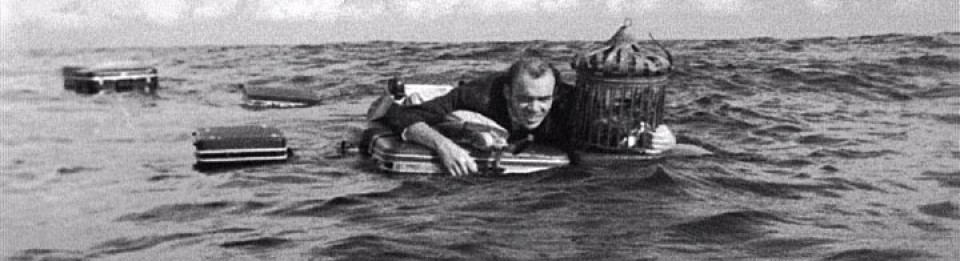
Fifty Shades of Blue – RIP, Dear King of Cats

Tags

,

Blue blood, of course, not collar,

A king of cats, an Oxford Blue

Who loved our terrace

And after-snack sunbathing.

Or looking nonchalantly at Charlie,

Pawing an errant wasp,

And stretching languidly,

Musing on the important questions like what’s for second dinner?

Blue maybe, but never dull and gloomy,

We loved the raffish wiggle in your stride,

The aristocratic belly marked a destiny

For contemplation, not the drudge of work.

Your gourmet palette tuned to modern tastes,

You loved the smell of barbecues

And they who cooked them.

When stakes were high, they win who dare

It’s Blue by name but always medium rare.

Poems of Place: La Guerite, Ile Ste Marguerite

Tags

,

The island fortress bakes in silence.

I sit shaded by the pines,

High above me, the look out post watches the bay,

The cicadas are strumming in anticipation of action,

The feeble breeze carries the voices of day-trippers

Waiting for the last boat of summer.

So musing on sentinels, I ponder

My talent for reconnaissance;

Nurtured from an early age (I think?)

By dad who dispatched me off

To take point and report back

On dangers lurking

At the end of Blackpool’s Central Pier.

In time, my nose for sensing what’s ahead

Became a skill people paid good money for.

But they call it strategy.

The restaurant is quiet now,

The final whistle has blown for the table footballers

The bikini pop up shop,

And the kaleidoscope of scenarios I have foreseen.

(*The look out post)

Poems of Place: Abermawr

Tags

,

Summer

Tonight I walked along the estuary of my youth,

Saw water colour landscapes of hope and fear

Watched the family outline in the surf,

Smelt the kelp and tasted salt once more,

Heard the white noise of waves breaking at the bar,

The tinkle of dinghy bells, the relentless nagging of the gulls,

The flap of ice cream banners in deserted cabins,

And witnessed the sun’s last defiant blaze,

As a crescent moon rose above Tyrau Mawr.

Winter

A November evening

A pocketful of birthday money

Waiting at the old signal box

Eating nougat

(pronounced the Anglo-Saxon way),

Shivering, happy and ambitious.

Wolf Hall by Hilary Mantel – A Critical Review

Tags

, ,


A Textbook Example of Repositioning?


The best characters, like all great brands, live in the minds (and hearts) of the audience. In modern marketing theory, the process by which products, people and services gain a piece of this mental real estate is called ‘positioning’[i].

Positioning recognizes that, in a complicated and busy world where there is so much choice, there is a continuous battle for the audience’s attention and only a disciplined and focused approach to creating meaning is likely to succeed and cut through the clutter. In fiction, perhaps a similar approach is also needed. As G.K. Chesterton said, ‘a good novel tells us the truth about its hero, but a bad novel tells us the truth about its author.’ [ii]

But there is one challenge greater than the projection of a character into the audience’s head, and that is the challenge of modifying a strong character’s reputation once it has been successfully created. This is what brand-smiths call ‘repositioning’, and Hilary Mantel’s Wolf Hall provides an excellent example of it.

Wolf Hall has won many literary awards but its most significant triumph has been the way in which it has succeeded in creating and popularising a ‘new model’ Thomas Cromwell. The conventional and popular view, derived from both academic history[iii] and contemporary fiction[iv], is of Cromwell as an unscrupulous Machiavellian thug who smashed and grabbed his way through monastic wealth and chopped off the heads of anyone who got in the way of the King’s business. Simon Schama’s colourful description of Cromwell’s plot against Anne Boleyn was written in 2000 and is not untypical:

‘What he [Cromwell] cooked up was thing of pure devilry; a finely measured brew, one part pornography, one part paranoia.’[v]

Drawing upon recent academic research that suggests that another interpretation is possible[vi], Mantel sets about reappraising him. Her new ‘framing’[vii] of Cromwell is of an altogether more sympathetic character: a man of his time, doing the best for his king, country, family and personal beliefs. This is a man who weeps, prays and loves.

The restaging is handled skilfully over 650 pages. Mantel takes few shortcuts. To enable the reader to see a different Thomas Cromwell she concentrates on his interactions with a small circle of key characters. Thomas, like Hamlet, is on stage throughout the book and in these encounters, described by the author from the point of view of an analyst deep within in his brain, we get to understand intimately what Cromwell thinks, believes and feels. Generally this works very well, but it is true that sometimes Mantel’s use of the pronoun ‘he’ in her narrative style confuses and slows down the story.

Thomas Wolsey is the first of Mantel’s instruments of repositioning.  Wolsey is Cromwell’s mentor and father figure who has an excellent grasp of people and values Cromwell’s talents as a fixer and negotiator who can bring a muscular rhetoric (or aCromwellian stare, the equivalent of a kick’) to the task of persuading courtiers to do what Wolsey wants. Wolf Hall is, on one level, the story of Wolsey’s fall, and how Cromwell manages to survive without compromising his sense of loyalty to his mentor. The courtier coalition set against Wolsey allows Mantel to show Thomas Cromwell as a loyal and pugnacious servant who refuses to desert his master even at the end, by which time his own life was in danger. The strategic significance of the Wolsey–Cromwell relationship is further demonstrated in the sequel to Wolf Hall, Bring up the Bodies[viii], which is the story of how Thomas avenges his mentor by destroying the whole faction which had worked to bring Wolsey down.

Thomas More is the other principal character that Mantel deploys to bring about her re-evaluation of Cromwell. Acting as a yin to Cromwell’s yang, Sir Thomas More is Cromwell’s complete intellectual, political and religious complement.  In a series of highly charged set pieces, Mantel uses More to put the conventional case against Cromwell. According to More, Cromwell is the Italian/Machiavellian, the heretic/atheist, and the unscrupulous/unprincipled creature of state. In defence of her protagonist, Mantel firstly asks the reader to re-evaluate the character of the prosecutor, Thomas More. In her telling of the story, More is no saintly liberal but an elitist bigot with a merciless intolerance for religious debate and a dark suit of cruelty. He is also shown to have a very bizarre set of family relationships. Then, in a series of debates between the two, she shows Cromwell arguing to maintain good order in the realm by the avoidance of war and all forms of religious extremism. In her portrayal, Mantel is drawing upon an important contemporary concept coined during religious wars in France: the idea of the politique[ix]. A politique was someone who put peace and balance in the commonwealth above religious faction. Mantel’s Cromwell is much more of a pragmatic politique than either a scheming Machiavellian or a religious fundamentalist.

Famous for creating encyclopaedic fact-bases for her books, whether lists of who-was-where-when, or what were hot contemporary fashions in food, dress and sex, Mantel uses an armoury of historical fact to build the case for Cromwell. After the book’s climax — the death of More — while Cromwell and Rafe are sharing a brief moment of decompression and discussing the detailed calendar of the next royal itinerary, Cromwell once again shows his humanity:

‘I seem to have four, five days in hand. Ah well. Who says I never get a holiday?’

Without any visible compromise to history, Mantel has been able to paint a compelling emotional narrative over an incontrovertible factual framework and chronology, with Cromwell at the centre. A similar sentiment was expressed by Sarah Dunant in her 2013 lecture:

‘Why should you make it up when history gives it to you?’[x]

In another Brookes lecture, Rebecca Abrams[xi] talked of the ‘Tudor history feeding frenzy’ and the current popularity of Tudor fiction. So, how does Mantel compare with other writers? CJ Sansom is one of the most well-respected writers to use the period. He writes well-crafted, carefully researched stories that mix historical fiction with crime. Sansom’s Cromwell[xii] plays more to the conventional stereotype and we see him blackmailing Sansom’s hero, the hunchback lawyer Shardlake, into undertaking various investigations. The setting is clearly Reformation London, and the time is 1529. In contrast, however, Mantel speaks to us as if it were London 2009 as well. There is a timeless quality to the writing and the book is rich in Cromwell quips, comments and one-liners that are absolutely true to the time but just as relevant today. Here is Wolsey speaking like an irritated CEO to a senior member of his board:

‘Thomas, what can I give you to persuade you never to mention this to me again? Find a way, just do it.’

Cromwell is Wolsey’s ‘man of business’, and speaks with a corporate lawyer’s voice. Here Cromwell is advising Wolsey on how to persuade Boleyn to allow his second daughter to follow the first into becoming a royal mistress:

‘Boleyn is not rich,’ he says. ‘I’d get him in. Cost it out for him. The credit side. The debit side.’

Thomas’ speeches are especially important at key moments of crisis in the narrative, such as the series of Cromwell/More confrontations, in which Cromwell desperately tries to get More to toe the party line. As these interactions reach their deadly denouement, Mantel swaps the Inns of Court banter of the early exchanges for longer, more oratorical and passionate speeches, where every debating trick is played. As Audley, the Lord Chancellor, says at the end of one attempt, ‘we won’t do better than that.’ And they didn’t. To the end, Mantel’s More remains superior, controlled and unassailable, and we sense that this is both a cause of genuine regret for Cromwell and his biggest failure.

In this exhaustive exercise in reappraisal, Mantel has one more repositioning trick to play: Cromwell tells Rafe to make sure that More’s daughter gets her father’s head from the London Bridge spike. This small act of kindness provides an illuminating contrast of the family values of these two Tudor giants and a final step in Mantel’s case history in repositioning.

Bibliography:

Bolt, Robert (1960) A Man For All Seasons

Burroway, Janet (2003) Imaginative Writing. Longman

Professor Mark Horowitz, review of The many faces of Thomas Cromwell, (review no. 1168) URL: http://www.history.ac.uk/reviews/review/1168; Date accessed: 14 March, 2013

Hutchinson, Robert (2007) The Rise and Fall of Henry VIII’s Most Notorious Minister. Phoenix

Knecht, RJ (1996) The French Wars of Religion 1559-1598. Longman

Lukeham, Noah (2010) The First Five Pages Oxford

Mantel, Hilary (2009) Wolf Hall. Fourth Estate

Mantel, Hilary (2012) Bring up the Bodies. Fourth Estate

May, Stephen (2010) Get Started in Creative Writing. Teach Yourself

Pinker, Steven (2007) The Stuff of Thought. Penguin

Ries, A and Trout, J (2001) Positioning. McGraw-Hill

Ridley, Jasper (1982) Statesman and Saint. Viking

Sansom, CJ  (2003) Dissolution. Viking

Schama, Simon (2000) A History Of Britain. BBC

Scholfield, John (2008) The Rise and Fall of Thomas Cromwell: Henry VIII’s Most Faithful Servant. History Press

Thorpe, Adam (1992) Ulverton. Secker and Warburg


[i] Ries, A. and Trout, J. (2001), Positioning. McGraw-Hill

[ii] Chesterton, G.K., Heretics quoted in May, Stephen (2010) Get Started in Creative Writing. Teach Yourself

[iii] Hutchinson, Robert (2007) The Rise and Fall of Henry VIII’s Most Notorious Minister. Phoenix

[iv] Bolt, Robert (1960) A Man For All Seasons is a typical example

[v] Schama, Simon (2000) A History of Britain. BBC

[vi] Scholfield, John (2008) The Rise and Fall of Thomas Cromwell: Henry VIII’s Most

Faithful Servant. History Press

[vii] Pinker, Steven (2007) The Stuff of Thought. Penguin, page 243

[viii] Mantel, Hilary (2012) Bring up the Bodies. Fourth Estate

[ix] For a definition, see http://en.wikipedia.org/wiki/Politique   and  Knecht,  RJ (1996) The French Wars of Religion 1559-1598. Longman

[x] Dunant, Sarah, Oxford Brookes guest lecture 2013. The author’s own notes.

[xi] Abrams, Rebecca, Oxford Brookes guest lecture 2012. The author’s own notes.

[xii] Sansom, CJ (2003) Dissolution. Viking